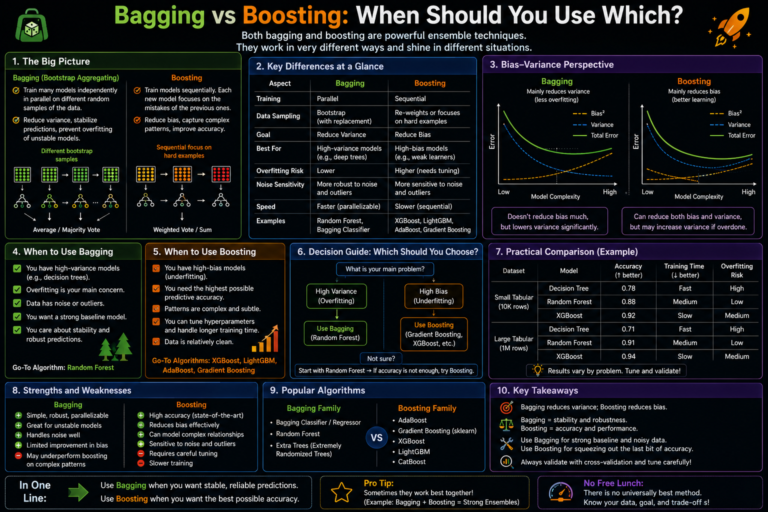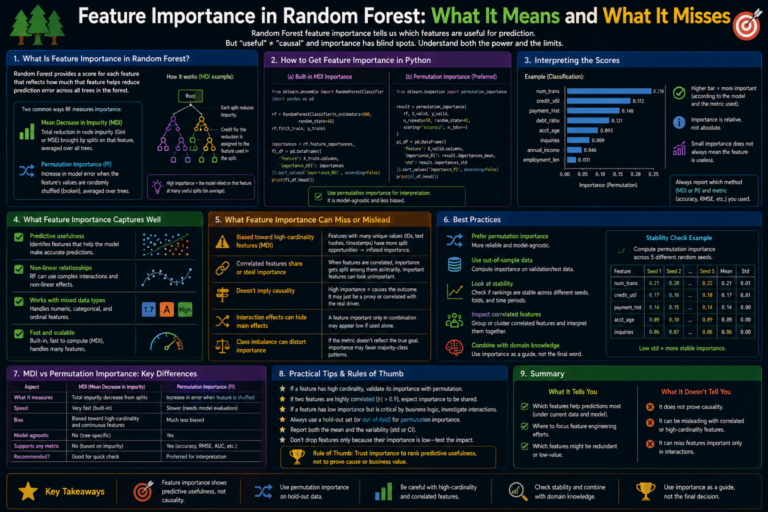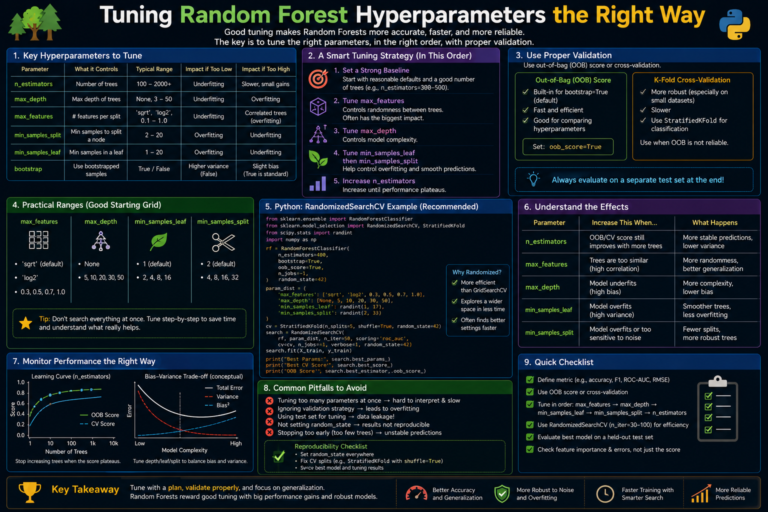

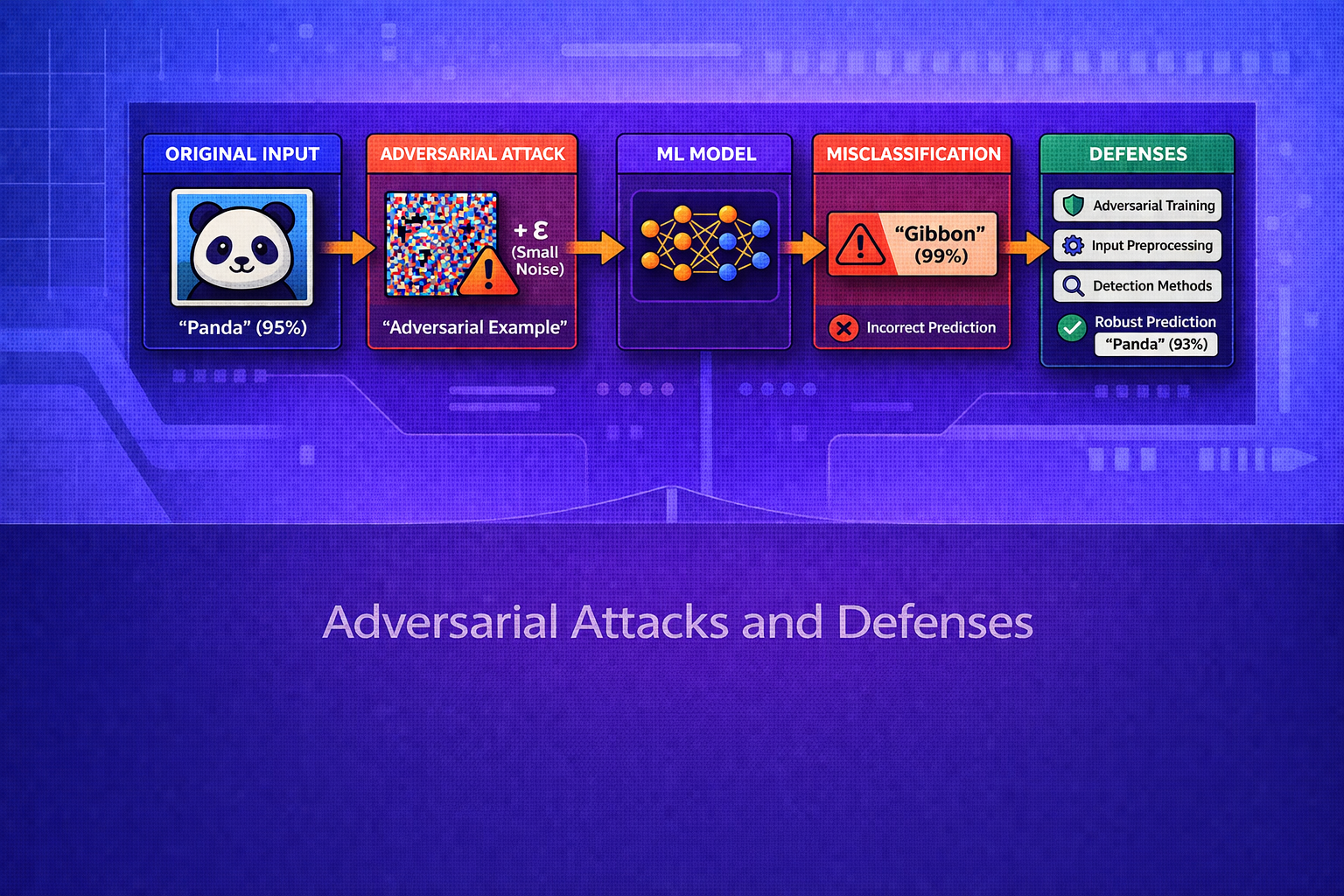
Adversarial machine learning studies how machine learning systems can be deliberately manipulated through crafted inputs, poisoned data, or model exploitation—and how such systems can be hardened against these threats. This whitepaper provides a technical introduction to adversarial attacks and defenses, with emphasis on evasion attacks, threat models, robustness metrics, common attack algorithms, training-time poisoning, and defensive strategies.
Abstract
Modern machine learning models, especially deep neural networks, can be highly vulnerable to small, carefully constructed perturbations that cause misclassification while appearing imperceptible or semantically minor to humans. These perturbations are known as adversarial examples. More broadly, adversarial attacks can target training data, model parameters, inference APIs, or downstream decision pipelines. This paper explains the formal attack-defense framework, including threat models, attack surfaces, white-box and black-box attacks, norm-bounded perturbations, transferability, Fast Gradient Sign Method (FGSM), Projected Gradient Descent (PGD), Carlini–Wagner-style optimization, poisoning and backdoor attacks, and core defense approaches such as adversarial training, certified robustness, detection, input preprocessing, and robust optimization. All formulas are embedded inline in HTML-friendly format for direct use in WordPress or similar editors.
1. Introduction
Let a trained model be represented as f(x), where
x ∈ ℝp is an input and the output may be a class prediction, score, or
probability vector. Under normal assumptions, one expects that small perturbations to x
should not drastically change the prediction if the semantics of the input remain essentially unchanged.
However, in adversarial machine learning, an attacker constructs a perturbed input
x' = x + δ such that:
δis small under some constraintx'looks similar or functionally similar tox- the model prediction changes in a desired way
This reveals that standard predictive accuracy does not imply robustness under malicious perturbation.
2. Why Adversarial Robustness Matters
Adversarial robustness matters because machine learning models are increasingly used in security-sensitive and high-stakes settings such as:
- identity verification and biometrics
- malware detection
- fraud detection
- medical diagnosis support
- autonomous systems
- document processing and moderation
- recommendation and ranking systems
In such settings, adversarial manipulation can cause financial loss, safety failure, privacy leakage, or trust erosion.
3. Threat Model
A threat model specifies what the attacker knows, what they can control, and what they are trying to achieve. Adversarial analysis is meaningful only relative to a clearly defined threat model.
3.1 Attacker Goal
The attacker may aim to:
- cause any misclassification
- force a specific target label
- reduce confidence in correct predictions
- trigger hidden backdoor behavior
- degrade system performance broadly
3.2 Attacker Knowledge
Common knowledge regimes include:
- White-box: full access to model architecture, parameters, and gradients
- Black-box: no internal access, only queries or outputs
- Gray-box: partial access, such as architecture family or training data distribution
3.3 Attacker Capability
The attacker may be able to manipulate:
- test-time inputs only
- training data
- model updates in federated settings
- system prompts or retrieval inputs in LLM pipelines
4. Evasion Attacks
Evasion attacks occur at inference time. The attacker does not alter the model or training data, but instead crafts adversarial inputs that cause incorrect output.
Given true label y and loss function
L(f(x), y), the attacker may solve:
maxδ L(f(x + δ), y)
subject to
||δ|| ≤ ε.
The constraint defines how much the input may be perturbed.
5. Norm-Bounded Perturbations
A common formalization restricts perturbations using vector norms.
5.1 L-infinity Constraint
Under an L∞ constraint:
||δ||∞ = maxj |δj| ≤ ε.
This bounds the maximum change to any input coordinate and is widely used in adversarial image benchmarks.
5.2 L2 Constraint
Under an L2 constraint:
||δ||2 = √(Σj δj2) ≤ ε.
This bounds the Euclidean size of the perturbation.
5.3 L1 Constraint
Under an L1 constraint:
||δ||1 = Σj |δj| ≤ ε.
This may correspond to perturbations concentrated on fewer coordinates.
6. Targeted vs Untargeted Attacks
In an untargeted attack, the adversary only wants the model to predict any incorrect label:
argmax f(x + δ) ≠ y.
In a targeted attack, the attacker wants a specific target label
t:
argmax f(x + δ) = t.
Targeted attacks are usually harder because they require steering the prediction toward a chosen outcome.
7. Fast Gradient Sign Method (FGSM)
FGSM is one of the simplest and most influential adversarial attack methods. It perturbs the input in the direction
of the sign of the gradient of the loss with respect to the input:
x' = x + ε · sign(∇x L(f(x), y)).
This creates a one-step adversarial example under an L∞ budget
ε.
7.1 Why FGSM Works
FGSM approximates the worst-case first-order increase in loss under an
L∞ constraint. The sign vector maximizes the linearized loss increase:
L(x + δ) ≈ L(x) + δT ∇xL(x).
Under the constraint ||δ||∞ ≤ ε, the maximizing perturbation is
δ = ε · sign(∇xL(x)).
8. Iterative Attacks and PGD
Stronger attacks often apply multiple iterative gradient steps. Projected Gradient Descent (PGD) is a standard
first-order iterative attack:
xt+1 = ΠB(x,ε)(xt + α · sign(∇x L(f(xt), y))),
where:
αis the step sizeΠB(x,ε)projects back into the allowed perturbation ballB(x,ε)is the norm-bounded set around the original input
PGD is often considered a strong first-order adversary, especially under
L∞ constraints.
9. Optimization-Based Attacks
Some attacks optimize a trade-off between perturbation size and attack success more directly. A general form is:
minδ ||δ|| + c · g(x + δ),
where g is designed so that the objective is small when the attack succeeds.
Carlini–Wagner-style attacks are well-known examples of such optimization-based methods. They are often stronger and more precise than simple gradient-sign attacks, though more computationally expensive.
10. Transferability of Adversarial Examples
A striking property of adversarial examples is transferability: perturbations crafted against one model often fool another model, even if architectures differ.
This makes black-box attacks practical. An attacker may train a surrogate model
f̃, craft adversarial inputs against it, and then transfer those inputs to a target
model f.
11. Black-Box Attacks
In black-box settings, the attacker does not know gradients directly. Common strategies include:
- transfer-based attacks using surrogate models
- score-based attacks using confidence outputs
- decision-based attacks using only predicted labels
- query-efficient gradient estimation
These attacks show that adversarial vulnerability is not merely a white-box artifact.
12. Adversarial Robustness Definition
A model is robust around input x within perturbation budget
ε if the predicted label remains unchanged for all allowed perturbations:
argmax f(x + δ) = argmax f(x) for all
||δ|| ≤ ε.
Robust accuracy on a dataset is the fraction of examples correctly classified even under worst-case allowed perturbation.
13. Adversarial Training
One of the most important defenses is adversarial training, which incorporates adversarial examples into training.
A robust optimization formulation is:
minθ E(x,y)[ max||δ||≤ε L(fθ(x + δ), y) ].
The inner maximization finds a strong attack for each training example. The outer minimization trains parameters
θ to perform well even on those attacked inputs.
13.1 Practical Adversarial Training
In practice, the inner maximization is usually approximated with attacks such as PGD. Adversarial training improves robustness but often:
- increases training cost substantially
- may reduce clean-data accuracy
- is specific to attack norms and budgets
14. Defensive Distillation and Gradient Masking
Some early defenses attempted to make gradients less useful or predictions smoother. However, many such defenses turned out to rely on gradient masking or obfuscation, where attacks appear weaker only because gradients become harder to exploit directly, not because the model is truly robust.
Robust evaluation now emphasizes adaptive attacks to avoid being misled by gradient obfuscation.
15. Input Preprocessing Defenses
Another line of defense applies transformations before inference, such as:
- denoising
- JPEG compression
- bit-depth reduction
- random resizing or cropping
- feature squeezing
While such methods may remove some perturbation artifacts, they are often bypassed by adaptive attacks that optimize through the preprocessing pipeline.
16. Detection-Based Defenses
Some defenses do not attempt to classify adversarial inputs correctly, but instead attempt to detect them. A detector
may define a score s(x) and reject inputs when
s(x) > τ.
Detection is difficult because adversarial examples can often be crafted to both fool the model and evade the detector.
17. Certified Robustness
Certified defenses aim to provide provable guarantees that no adversarial perturbation within a specified norm budget
can change the prediction. For example, one may seek a certified radius
r(x) such that:
argmax f(x + δ) = argmax f(x) for all
||δ|| ≤ r(x).
Certified robustness is attractive because it provides guarantees rather than only empirical resilience, but such methods can be computationally expensive and may scale poorly to large models.
18. Randomized Smoothing
One influential certified approach is randomized smoothing. It constructs a smoothed classifier by averaging
predictions under Gaussian noise:
g(x) = argmaxc P(f(x + η) = c),
where η ~ 𝒩(0, σ2I).
Under certain conditions, this yields certified robustness in
L2 norm.
19. Data Poisoning Attacks
Not all adversarial attacks happen at inference time. In poisoning attacks, the attacker manipulates training data so that the learned model becomes degraded or biased.
A poisoning attack may aim to:
- reduce general accuracy
- cause targeted failure on specific inputs
- implant hidden triggers or backdoors
20. Backdoor Attacks
In a backdoor attack, the attacker injects training samples containing a trigger pattern associated with a chosen target label. The model performs normally on clean data but misclassifies inputs containing the trigger.
Conceptually, if a trigger transformation is T(x), the attack tries to ensure:
f(T(x)) = t
for many inputs x, while preserving normal accuracy otherwise.
21. Poisoning in Federated and Distributed Learning
In federated learning, poisoning may occur through malicious client updates rather than explicit raw-data injection. Attackers may send crafted gradient or parameter updates to bias the global model or implant backdoors.
This makes robust aggregation and update validation especially important in distributed ML systems.
22. Adversarial Attacks Beyond Vision
Although adversarial examples were first highlighted strongly in image classification, adversarial ML now spans many domains:
- text and NLP perturbations
- audio and speech adversarial inputs
- tabular fraud-evasion manipulation
- malware and spam evasion
- recommendation and ranking manipulation
- prompt injection and jailbreak attacks for LLM systems
The attack form depends heavily on domain constraints, semantics, and attacker capabilities.
23. Evaluation of Defenses
Defensive methods must be evaluated carefully. Standard clean accuracy is not enough. One should measure:
- robust accuracy under strong adaptive attacks
- attack success rate
- performance across multiple norms and budgets
- trade-off between clean and robust accuracy
- defense stability under threat-model changes
A defense that only defeats weak attacks is not necessarily meaningful.
24. Clean Accuracy vs Robust Accuracy
Robustness often comes with trade-offs. A model optimized purely for standard accuracy may be highly vulnerable, while a robustly trained model may sacrifice some clean-data performance.
This trade-off is an important practical consideration in deployment.
25. The Robust Optimization View
Adversarial defense is often framed as robust optimization:
minθ E(x,y)[ supδ ∈ Δ L(fθ(x + δ), y) ],
where Δ is the allowed perturbation set.
This formulation emphasizes worst-case local behavior rather than average-case prediction performance alone.
26. Practical Defense Strategy
In practice, meaningful defense often requires multiple layers:
- robust model training
- careful threat-model definition
- secure data and training pipelines
- monitoring and anomaly detection
- defense evaluation with adaptive attacks
- system-level safeguards beyond the model itself
27. Strengths of Adversarial Analysis
- reveals hidden failure modes of ML systems
- improves security thinking in model deployment
- supports robustness benchmarking beyond accuracy
- motivates more reliable and trustworthy AI systems
28. Limitations and Open Challenges
- robust training is computationally expensive
- defenses are often threat-model-specific
- certified methods can be conservative or hard to scale
- semantic robustness is harder than norm-bounded robustness
- evaluation remains difficult in realistic black-box and multimodal settings
29. Best Practices
- Always define the threat model explicitly before claiming robustness.
- Evaluate defenses with strong adaptive attacks, not only standard benchmarks.
- Use adversarial training when robustness is operationally important and compute budget allows it.
- Combine model-level defenses with system-level security controls.
- Be cautious of defenses that appear effective only because of gradient masking.
- Measure both clean accuracy and robust accuracy.
30. Conclusion
Adversarial attacks and defenses expose a fundamental truth about modern machine learning: high predictive accuracy does not imply reliability under malicious manipulation. Small input perturbations, poisoned training data, or crafted distributed updates can cause large downstream failures if robustness is not addressed directly.
Understanding adversarial ML requires understanding both attack construction and defense limitations. Techniques such as FGSM, PGD, transfer attacks, poisoning, and backdoors show how vulnerable models can be. Defenses such as adversarial training, secure aggregation, robust optimization, and certified methods provide increasingly mature responses, but no universal solution exists. As AI systems move deeper into security-sensitive workflows, adversarial robustness becomes a core part of trustworthy machine learning engineering.