Home

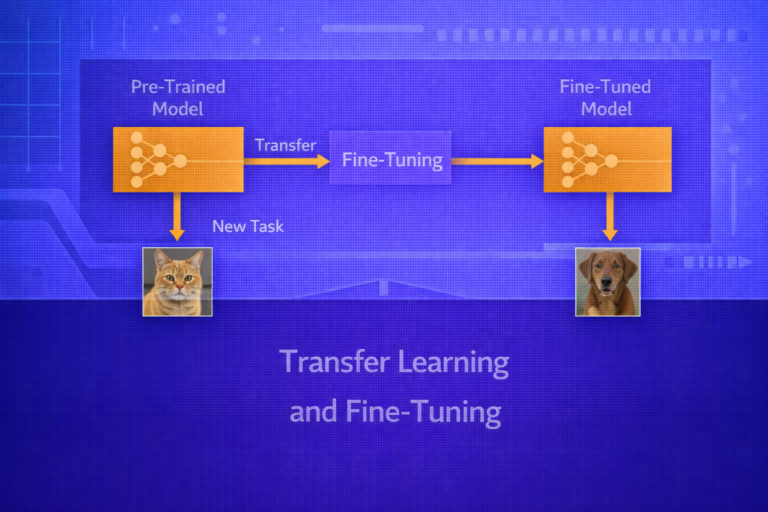
Transfer Learning and Fine-Tuning

Transfer learning is one of the most important practical ideas in modern machine learning. Rather than training a model from scratch for every new task, transfer learning reuses knowledge learned from a source task to improve learning on a target…
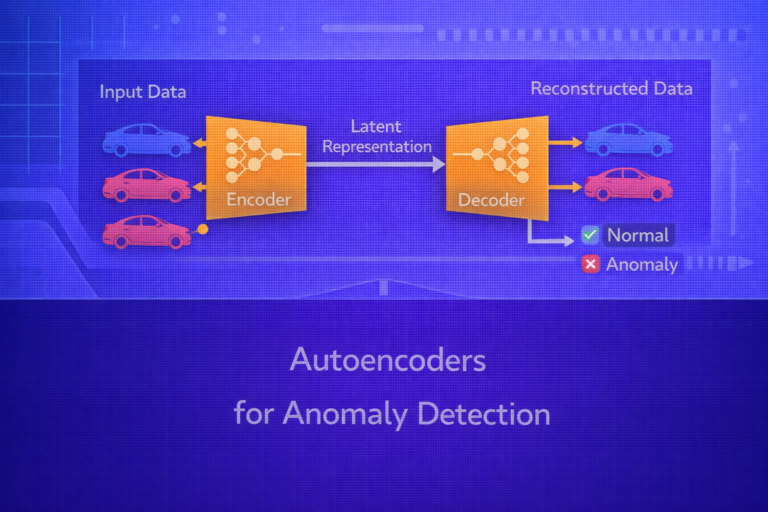
Autoencoders for Anomaly Detection

Autoencoders are neural networks trained to reconstruct their inputs. When trained primarily on normal data, they learn a compressed representation of typical structure and often reconstruct normal examples well while producing larger reconstruction errors on unusual or anomalous patterns. This…

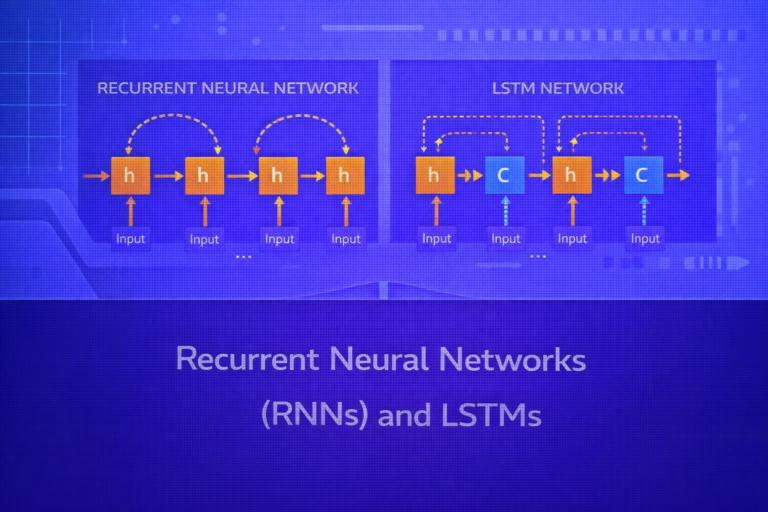
Recurrent Neural Networks (RNNs) and LSTMs

Recurrent Neural Networks (RNNs) were developed to model sequential and temporally dependent data, where the order of observations matters and current predictions often depend on previous context. Long Short-Term Memory networks (LSTMs) were introduced to overcome key optimization limitations of…

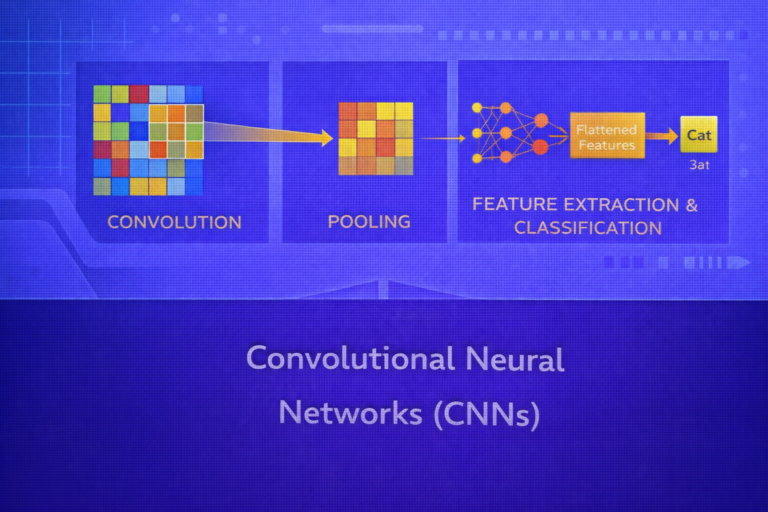
Convolutional Neural Networks (CNNs)

Convolutional Neural Networks (CNNs) are one of the foundational architectures in deep learning, especially for image, video, audio, and spatially structured data. Their key innovation is to replace fully connected dense interactions with localized receptive fields, shared weights, and hierarchical…

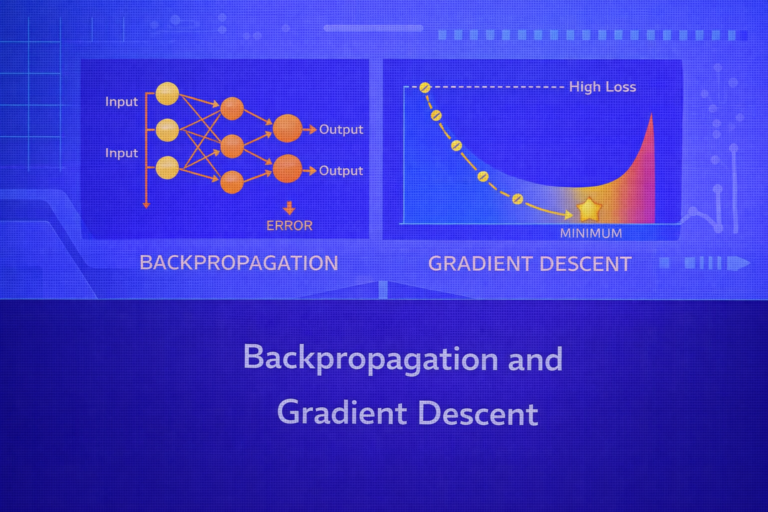
Backpropagation and Gradient Descent

Backpropagation and gradient descent form the computational core of modern neural network training. Gradient descent provides the optimization framework for minimizing a loss function, while backpropagation provides the efficient mechanism for computing the gradients required by that optimization. Together, they…