Uma Mahesh

Uma Mahesh

Author is working as an Architect in a reputed software company. He is having nearly 21+ Years of experience in web development using Microsoft Technologies.

Naive Bayes Classifier
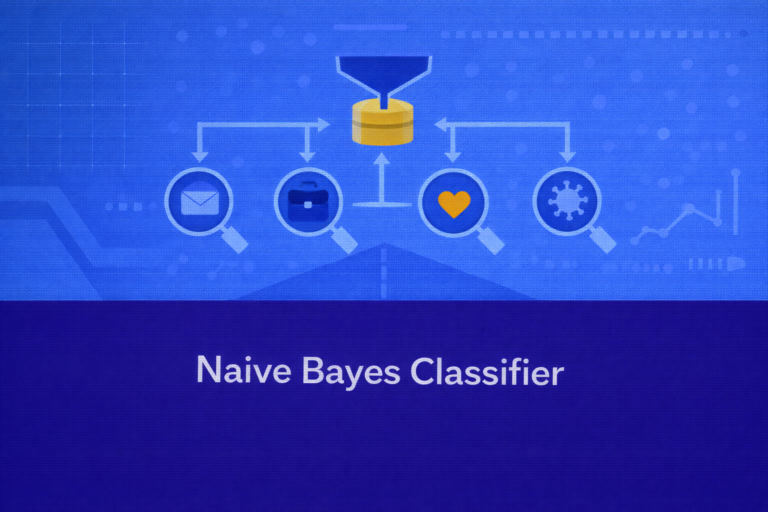
Naive Bayes is a family of probabilistic classifiers based on Bayes’ theorem and a strong conditional independence assumption among features. Despite the simplicity of that assumption, Naive Bayes remains one of the most effective, computationally efficient, and interpretable baseline classifiers…
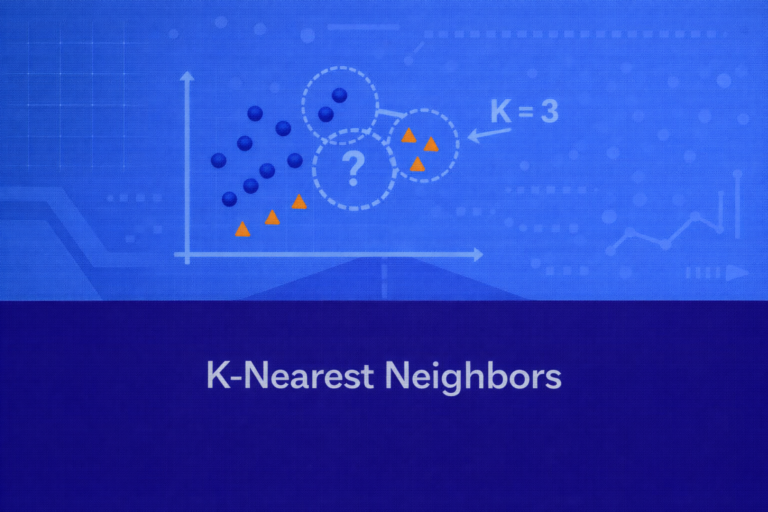
K-Nearest Neighbors (KNN)

K-Nearest Neighbors (KNN) is one of the most intuitive non-parametric supervised learning algorithms. It is used for both classification and regression, and it operates on a simple idea: similar observations tend to have similar outputs. Unlike models that explicitly learn…

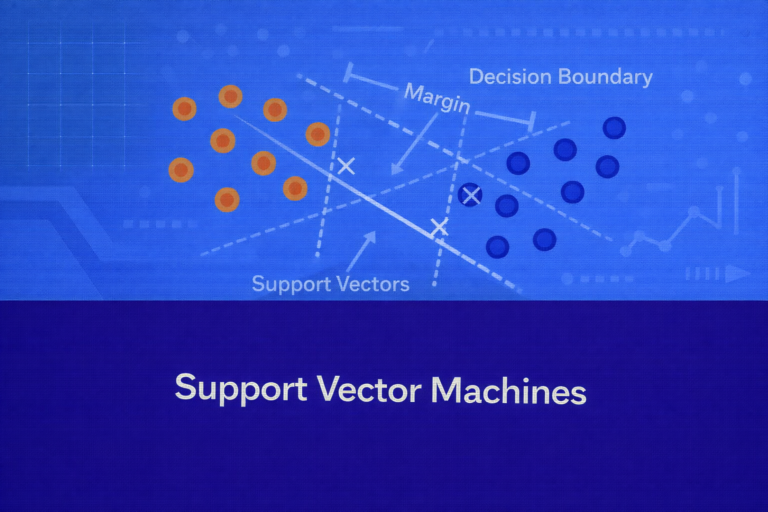
Support Vector Machines (SVM)

Support Vector Machines are among the most elegant and mathematically grounded supervised learning algorithms. They are used for both classification and regression, and are especially valued for their geometric intuition, strong theoretical underpinnings, effectiveness in high-dimensional spaces, and the kernel…

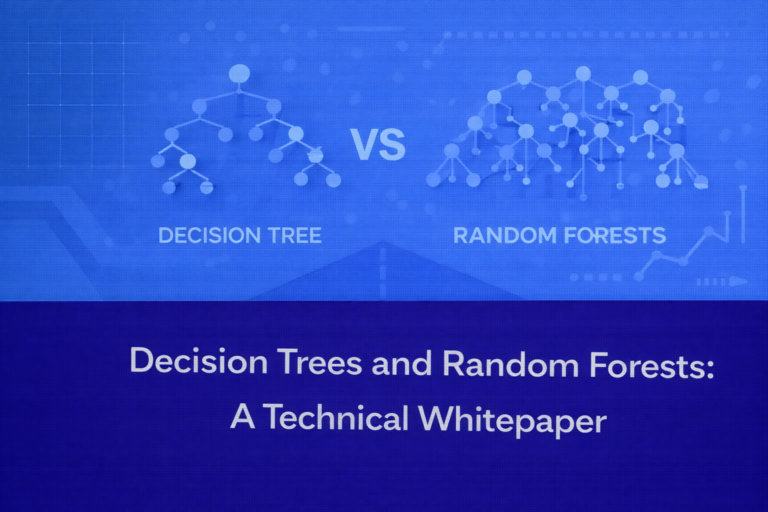
Decision Trees and Random Forests

Decision Trees and Random Forests are foundational tree-based learning methods used for both prediction and classification on structured data. They are especially valued because they can model nonlinear relationships, automatically capture interactions, work with mixed feature types, and offer a…

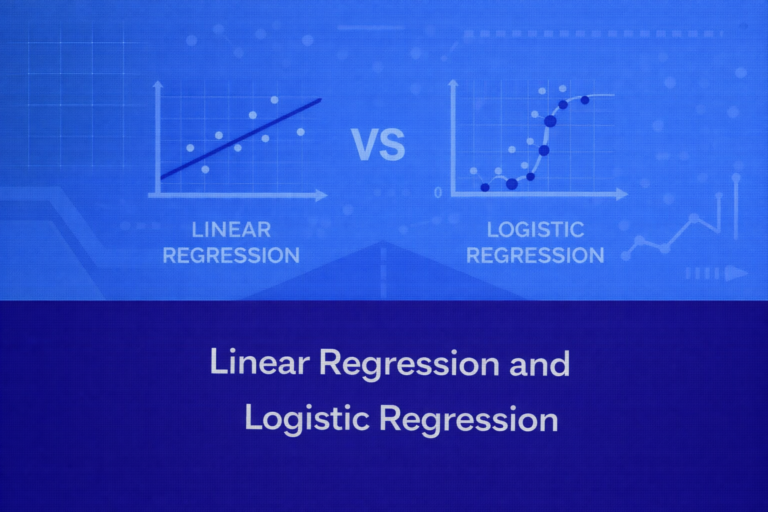
Linear Regression and Logistic Regression

A detailed technical treatment of regression models for prediction and classification tasks, with HTML-formatted formulas suitable for WordPress. Abstract Linear Regression and Logistic Regression are two of the most foundational supervised learning algorithms in statistics, machine learning, econometrics, and predictive…

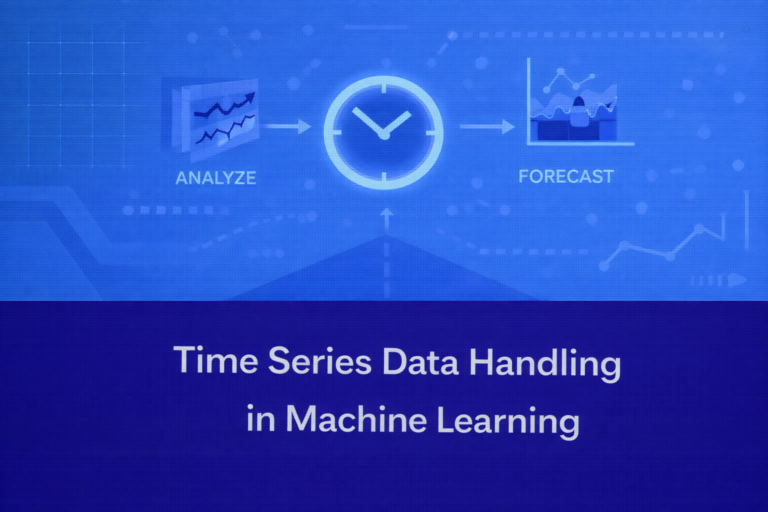
Time Series Data Handling in Machine Learning

Techniques for Analyzing and Forecasting Sequential Data Abstract Time series data represents observations recorded sequentially over time. Unlike traditional datasets where observations are independent, time series data contains temporal dependencies, meaning past values influence future values. Such data is common…

Data Privacy Regulations in AI Systems

Understanding GDPR and CCPA Compliance for Handling Sensitive Data Abstract Artificial Intelligence systems increasingly rely on large datasets containing personal and sensitive information. As organizations collect, process, and analyze data to build predictive models, concerns about privacy, security, and ethical…

Dealing with Missing Data in Machine Learning

Imputation Methods and Strategies for Handling Incomplete Datasets Abstract Real-world datasets are rarely complete. Missing values occur frequently due to errors in data collection, sensor failures, incomplete surveys, system migrations, or data corruption. If not handled properly, missing data can…